
Navigating the Supply Chain for Hauni Protos Spare Parts
In the high-stakes world of tobacco manufacturing, downtime is the enemy of profitability. When critical Hauni Protos spare parts fail, the pressure to restore production immediately is immense. However, relying solely on Original Equipment Manufacturer (OEM) channels often presents significant logistical hurdles. Long lead times, rigid inventory protocols, and limited technical support can stall operations for weeks. This article explores how third-party alternatives provide a viable, strategic solution for maintaining operational continuity without sacrificing the precision required in modern cigarette production lines.
For many maintenance managers, the fear of compatibility issues prevents them from exploring alternative suppliers. Yet, the reality is that many third-party components are manufactured to exact OEM specifications or exceed them using superior materials. By diversifying your supply chain, you reduce dependency on single-source vendors who may be facing their own production bottlenecks. Understanding the landscape of available alternatives allows plant managers to make informed decisions that balance speed, cost, and performance.
This guide focuses on the core mechanical and electronic components of the Hauni Protos series, specifically addressing the microwave scanner and cutting knife assemblies. We will delve into the technical nuances of these parts, explaining why quality control matters more than ever. Whether you are managing a Protos 70, 80, or 90, knowing how to evaluate and source reliable replacements is essential for sustaining high-efficiency output.
The Challenge of Original Equipment Manufacturer (OEM) Delays
One of the most persistent issues in industrial maintenance is the unpredictability of OEM delivery schedules. While OEMs guarantee authenticity, they often lack the flexibility to expedite shipments for urgent needs. In contrast, specialized third-party suppliers often maintain larger stockpiles of critical components, including Hauni Protos replacement parts, allowing for immediate dispatch. This agility can mean the difference between a few hours of downtime and a full day of lost production.
Furthermore, OEMs frequently bundle parts into large minimum order quantities or require long-term contracts. Third-party providers typically offer more flexible purchasing options, allowing plants to buy exactly what they need, when they need it. This flexibility extends to technical support as well; specialized suppliers often provide direct access to engineers who understand the specific quirks of the Protos series, offering troubleshooting advice that generic OEM support may not provide.
By shifting some of your procurement strategy to reputable third-party vendors, you create a buffer against supply chain disruptions. This does not mean abandoning OEMs entirely but rather creating a hybrid approach where critical, high-failure-rate components are sourced from agile, high-quality alternative suppliers. This strategy ensures that your maintenance team is never left waiting for parts that are essential to keeping the line moving.
Cost Efficiency Without Compromising Quality
Cost reduction is a primary driver for seeking alternative suppliers, but it must never come at the expense of machine integrity. High-quality third-party Hauni machine components are often priced significantly lower than OEM equivalents because they bypass the overhead costs associated with large corporate branding and distribution networks. However, the key lies in selecting suppliers who invest in rigorous quality assurance processes.
When evaluating third-party parts, look for suppliers who provide detailed material certifications and tolerance specifications. For instance, cutting knives should be made from high-grade carbide with precise hardness ratings, while electronic components like scanners must meet strict electromagnetic compatibility standards. By focusing on these technical specifications rather than just price, you can achieve substantial cost savings while maintaining the performance standards required by your production targets.
Additionally, third-party parts often offer better lifecycle value. Many alternative suppliers offer extended warranties or replacement guarantees that match or exceed OEM policies. This reduces the total cost of ownership by minimizing the risk associated with part failure. Ultimately, the goal is to optimize the balance between upfront cost and long-term reliability, ensuring that every dollar spent on maintenance contributes to increased uptime and productivity.
Evaluating Critical Component Performance
Among the most sensitive components in the Hauni Protos line is the microwave scanner, which plays a crucial role in moisture and density measurement. When sourcing a Hauni Protos microwave scanner, signal stability and accuracy are paramount. Third-party replacements must replicate the precise frequency and amplitude characteristics of the original unit to ensure consistent quality control across the production line. Any deviation can lead to incorrect moisture readings, resulting in product waste or non-compliance with customer specifications.
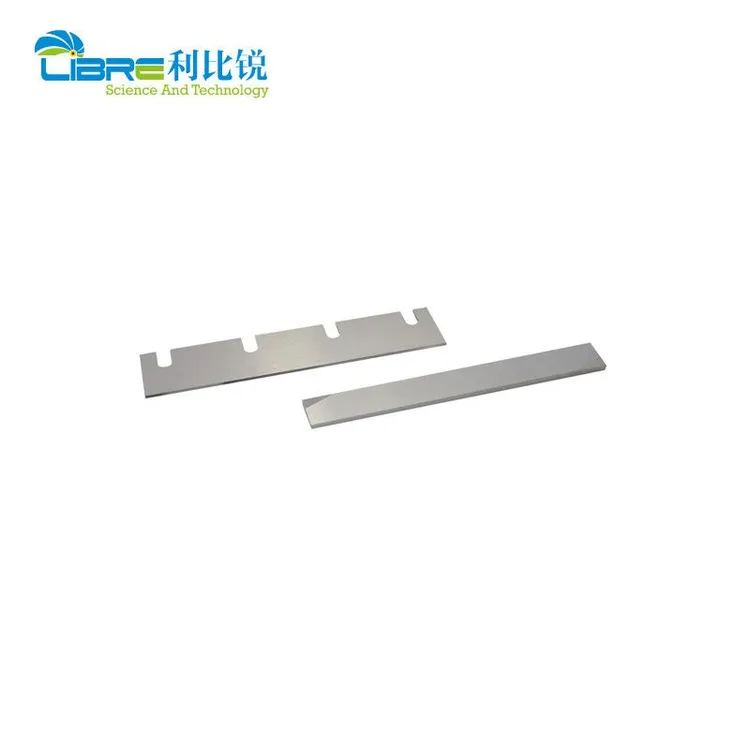
Similarly, the cutting knife is a wear part that undergoes extreme stress. The durability of these blades depends heavily on the hardness standards and the precision of the edge geometry. High-quality third-party knives are often manufactured using advanced grinding techniques that provide a sharper, longer-lasting edge than standard OEM offerings. By focusing on these critical components, plants can significantly reduce maintenance frequency and improve the overall quality of the final cigarette product.
Understanding the technical requirements of these parts allows maintenance teams to make informed purchasing decisions. It is not enough to simply find a part that fits; it must perform identically to the original under high-speed operating conditions. This section explores the specific technical criteria that define a high-quality replacement for these vital components.
Microwave Scanner: Ensuring Signal Stability and Accuracy
The microwave scanner in a Protos machine is responsible for non-contact measurement of the tobacco strand's moisture and density. A third-party replacement must match the original's frequency stability, typically operating within a tight tolerance band to prevent interference with other electronic systems. Signal integrity is critical; any noise or drift in the output can cause the control system to make incorrect adjustments to the process, leading to inconsistent product quality.
When selecting a replacement scanner, verify that the supplier provides calibration data and test reports. These documents should confirm that the unit meets the specific output voltage and frequency requirements for your machine model. Additionally, check the build quality of the housing and connectors. Robust construction ensures that the scanner can withstand the vibrations and temperature fluctuations present in a production environment, maintaining its accuracy over time.
Furthermore, compatibility with the machine's control software is essential. Some third-party scanners may require specific configuration settings to integrate seamlessly with the Protos control system. A reputable supplier will provide detailed installation guides and software parameters to ensure a smooth transition. By prioritizing signal stability and accuracy, you can maintain the high level of process control that your operation demands.
Cutting Knives: Hardness Standards and Durability
The cutting knife is subjected to immense friction and impact forces during operation. To ensure longevity, third-party knives must adhere to strict hardness standards, typically measured on the Rockwell C scale. High-quality replacements often use premium carbide materials that offer superior wear resistance compared to standard steel blades. The hardness must be consistent across the entire blade to prevent uneven wear and frequent sharpening.
Beyond hardness, the geometry of the cutting edge is crucial. Precision grinding ensures a clean cut, reducing the amount of tobacco dust and waste generated during production. Third-party suppliers who invest in advanced grinding technology can produce knives with sharper, more durable edges that last longer than OEM equivalents. This not only reduces material waste but also decreases the frequency of knife changes, saving valuable downtime.
Additionally, consider the coating options available for third-party knives. Specialized coatings can further enhance wear resistance and reduce friction, extending the life of the blade even further. By selecting knives with the appropriate hardness, geometry, and coating, you can achieve significant improvements in cutting performance and cost efficiency. This attention to detail ensures that your cutting system operates at peak efficiency, contributing to the overall quality of the final product.
Ensuring Compatibility and Reliability Across Models
Ensuring that replacement parts fit perfectly is the first step in a successful installation. Different models within the Protos series, such as the Protos 70, 80, and 90, have unique mechanical and electronic interfaces. A reputable supplier of Hauni Protos spare parts will provide model-specific components that match the exact dimensions and mounting points of your machine. This attention to detail prevents the need for modifications or improvisations during installation, which can lead to premature failure.
Compatibility extends beyond physical fit to include electronic communication protocols. For electronic components like the microwave scanner, the replacement must be able to communicate effectively with the machine's control unit. Third-party suppliers often provide detailed compatibility matrices that list which parts are suitable for each model. By consulting these matrices, you can ensure that you are purchasing the correct part for your specific machine configuration.
Furthermore, consider the long-term implications of using third-party parts. While they may offer immediate cost savings, it is essential to choose suppliers who are committed to continuous improvement and quality control. Regularly reviewing the performance of third-party components and providing feedback to suppliers can help drive improvements in product quality and reliability. This collaborative approach ensures that you get the best possible value from your maintenance investments.
How We Ensure Fit for Protos 70, 80, and 90 Models
To guarantee a perfect fit for Protos 70, 80, and 90 models, we employ a rigorous verification process. Each component is measured against original OEM specifications using advanced coordinate measuring machines (CMM). This ensures that every dimension, from bolt holes to shaft diameters, matches the original design. For electronic components, we perform functional tests to verify compatibility with the machine's control systems.
We also maintain a comprehensive database of part numbers and cross-references for all Protos models. This allows us to quickly identify the correct replacement part for any given machine, regardless of its age or configuration. Our technical team is available to assist with part selection, providing expert advice on compatibility and performance. This level of support ensures that you can source the right parts with confidence.
Additionally, we offer custom manufacturing services for obsolete or hard-to-find parts. If you are operating an older Protos model that no longer has readily available OEM parts, we can reverse-engineer and produce high-quality replacements. This service ensures that your machines can continue to operate efficiently, even as original parts become scarce. By combining precise manufacturing with expert technical support, we ensure that every part we supply fits and functions perfectly.
Testing Protocols: From Bench to Production Line
Before any part leaves our facility, it undergoes a series of rigorous tests to ensure it meets our high standards. For mechanical components like cutting knives, we perform hardness tests, edge retention tests, and dimensional inspections. These tests verify that the part meets the specified material properties and geometric tolerances. For electronic components, we conduct signal stability tests and electromagnetic compatibility (EMC) tests to ensure reliable performance.
We also simulate real-world operating conditions during testing. For example, cutting knives are subjected to high-speed cutting tests to evaluate their durability and performance under load. Microwave scanners are tested in controlled environments to verify their accuracy and stability. These simulations help us identify any potential issues before the part is installed in a production environment.
Finally, we provide detailed test reports with each shipment. These reports document the results of all testing performed on the part, providing you with proof of quality and performance. This transparency allows you to verify that the parts you receive meet your specifications. By implementing these comprehensive testing protocols, we ensure that every part we supply is reliable, durable, and ready for immediate installation.
Implementation and Best Practices
Installing third-party parts requires careful planning and execution to ensure a smooth transition. Proper installation procedures are critical to the long-term performance and reliability of the components. By following best practices and avoiding common pitfalls, you can maximize the benefits of using alternative suppliers and ensure that your machines continue to operate at peak efficiency.
This section provides step-by-step guidance on the replacement process, highlighting key considerations and potential challenges. It also offers practical tips for maintaining the new parts and troubleshooting any issues that may arise. By adhering to these guidelines, you can ensure a successful implementation and achieve the desired results.
Step-by-Step Replacement Procedures
Before beginning the replacement process, ensure that the machine is properly locked out and tagged out to prevent accidental startup. Gather all necessary tools and equipment, including torque wrenches, alignment tools, and cleaning supplies. Carefully remove the old part, taking note of its orientation and any associated hardware. Clean the mounting surfaces thoroughly to remove any debris or old sealant.
Install the new part according to the manufacturer's instructions. Pay close attention to torque specifications and alignment requirements. For electronic components, ensure that all connections are secure and that the correct software parameters are loaded. Once the part is installed, perform a functional test to verify that it is operating correctly. Monitor the machine for any unusual noises or vibrations during the test.
After the initial test, run the machine at low speed to further verify performance. Gradually increase the speed to the normal operating level, monitoring the part's behavior closely. If any issues are detected, stop the machine immediately and diagnose the problem. Document the installation process, including any adjustments made, for future reference. This documentation can be invaluable for troubleshooting and maintenance planning.
Common Pitfalls and How to Avoid Them
One of the most common pitfalls in part replacement is improper installation. Using the wrong tools or failing to follow torque specifications can lead to premature failure. To avoid this, always use the recommended tools and follow the manufacturer's instructions carefully. Another common issue is contamination. Ensure that all parts and surfaces are clean before installation to prevent damage from debris.
Another pitfall is ignoring compatibility issues. Always verify that the replacement part is suitable for your specific machine model and configuration. Using an incompatible part can cause damage to the machine or result in poor performance. Finally, do not neglect post-installation monitoring. Regularly inspect the new part for signs of wear or damage, and address any issues promptly
