
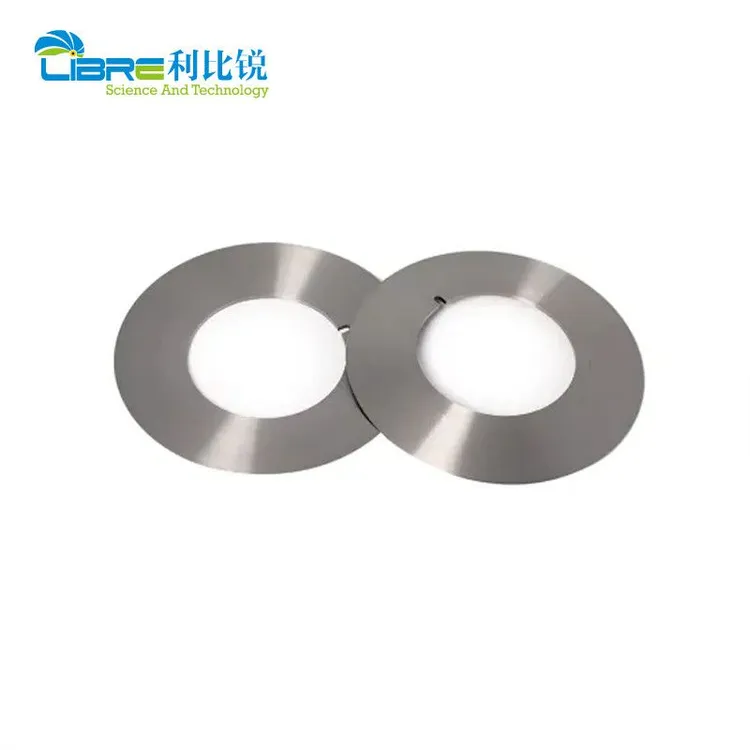
The Critical Need for Precision in Battery Manufacturing
The production of lithium-ion batteries demands an unprecedented level of accuracy, where the integrity of the slitting process directly impacts cell safety and performance. Lithium battery slitting blades are not merely cutting tools; they are precision instruments that dictate the uniformity of electrode coatings. In high-speed manufacturing environments, even microscopic deviations in cut quality can lead to internal short circuits, reduced energy density, or catastrophic thermal runaway in the final battery pack. As manufacturers push for higher throughput and thinner electrode layers, the mechanical demands on the cutting edge become exponentially more severe, requiring materials that can withstand extreme stress without compromising dimensional stability.
Precision in this context extends beyond simple geometric accuracy; it encompasses the consistency of the cut edge over thousands of meters of continuous production. A single poor cut can introduce stress concentrations in the active material, leading to delamination or particle shedding during subsequent winding or stacking processes. Therefore, the selection of slitting equipment must prioritize tools that offer repeatable performance under dynamic conditions. The industry has shifted towards solutions that minimize vibration and ensure stable cutting forces, which are critical for maintaining the tight tolerances required by modern EV and consumer electronics battery designs.
Furthermore, the transition to larger format cells and higher capacity densities places additional strain on the slitting operation. Thicker electrodes require more cutting force, while thinner separators demand sharper edges to prevent tearing. This dual challenge necessitates a holistic approach to tooling selection, where the blade's material properties, geometry, and coating are optimized specifically for the unique tribological characteristics of battery materials. Understanding these critical needs is the first step toward optimizing the entire production line, ensuring that the slitting process contributes to, rather than hinders, overall manufacturing efficiency.
Common Issues: Chipping, Burrs, and Dust Generation
One of the most persistent challenges in battery electrode processing is the generation of burrs and particulate debris, which are directly linked to the condition and quality of the hard alloy circular knives. When a blade begins to degrade or lacks sufficient edge stability, it tends to tear the material rather than shear it cleanly. This tearing action creates microscopic burrs on the cut edges of the anode and cathode foils. These burrs, if not effectively removed, can pierce the separator during cell assembly, leading to internal shorts and significant safety hazards. Consequently, controlling burr height is not just a quality metric but a critical safety requirement in battery manufacturing.
Chipping is another prevalent issue that arises from improper material selection or excessive cutting forces. When the carbide grade is too brittle for the specific application, or when the blade experiences micro-vibrations at high speeds, small fragments of the cutting edge can break off. These fragments become contaminants within the cleanroom environment, posing a severe risk to product yield. Dust generation is exacerbated by chipping and poor edge retention, requiring more frequent cleaning of the slitting station and increasing the risk of particulate contamination in the final cell. Mitigating these issues requires a deep understanding of the relationship between material hardness, toughness, and edge geometry.
Additionally, the accumulation of dust and debris can lead to secondary damage, such as scratching the surface of the foil or causing uneven winding tension. This not only affects the electrical performance of the battery but also increases maintenance downtime. Manufacturers must therefore address these common issues proactively by selecting blades with superior edge stability and wear resistance. By reducing the frequency of chipping and burr formation, companies can significantly improve their cleanroom hygiene standards and reduce the cost associated with defect-related scrap. Addressing these fundamental problems is essential for achieving consistent, high-quality output in modern battery production lines.
Understanding HRA 89-92.5 Hardness and Its Benefits
The hardness of tungsten carbide slitting blades is a primary determinant of their wear resistance and ability to maintain a sharp cutting edge over extended periods. In the battery industry, a hardness range of HRA 89 to 92.5 is considered the industry standard for high-performance slitting applications. This specific hardness level offers an optimal balance between wear resistance and toughness. If the blade is too soft, it will dull quickly, leading to increased burr formation and frequent changes. Conversely, if it is too hard, it may become brittle and prone to catastrophic failure under impact or vibration. The HRA 89-92.5 range ensures that the blade can withstand the abrasive nature of active materials like graphite and NCM without excessive degradation.
Benefits of this hardness range include extended tool life and consistent cut quality. Blades within this specification maintain their edge sharpness longer, which translates to fewer interruptions in production for blade changes. This consistency is crucial for maintaining the dimensional accuracy of the slit strips, ensuring that the final wound or stacked cells meet precise specifications. Moreover, higher hardness reduces the friction between the blade and the material, lowering the cutting force and reducing heat generation. This thermal stability helps prevent damage to the aluminum or copper foil substrates, which can be sensitive to excessive heat.
Furthermore, the precision of the hardness control during the manufacturing process is vital. Variations in hardness can lead to uneven wear patterns, causing the blade to wobble or cut inaccurately. High-quality manufacturers ensure tight tolerances in hardness distribution across the entire blade surface. This uniformity guarantees that the cutting performance remains stable throughout the blade's lifecycle. By selecting blades with verified HRA 89-92.5 hardness, battery manufacturers can achieve a more predictable maintenance schedule and lower overall operational costs, as the blades perform reliably under high-speed conditions without premature failure.
The Role of Micro-Grain Carbide in Edge Stability
Micro-grain carbide technology has revolutionized the performance of lithium battery slitting blades by significantly enhancing edge stability and sharpness. Traditional carbide grades may struggle to maintain a fine edge when cutting thin, delicate materials like battery foils. Micro-grain structures, with particle sizes often below 0.5 microns, allow for a much finer and more polished cutting edge. This fine grain structure reduces the likelihood of micro-chipping and provides a smoother surface finish, which is essential for preventing burr formation. The improved edge stability ensures that the blade can make clean, precise cuts even at high speeds, maintaining consistency over long production runs.
The benefits of micro-grain carbide extend beyond just edge sharpness. It also improves the blade's resistance to wear and corrosion. Battery materials, particularly cathode powders, can be highly abrasive and chemically active. Micro-grain carbide's dense structure minimizes porosity, reducing the adhesion of material residues to the blade surface. This non-stick characteristic helps maintain a consistent cutting gap and reduces the risk of contamination. Additionally, the enhanced toughness of micro-grain carbide allows the blade to absorb shock and vibration better than coarser grades, further contributing to its longevity and reliability in demanding environments.
Implementing micro-grain carbide blades can lead to significant improvements in product quality and operational efficiency. The reduced need for frequent blade changes and the lower incidence of defects result in higher overall equipment effectiveness (OEE). For manufacturers producing high-density batteries with thin electrodes, the use of micro-grain carbide is often a necessity rather than a luxury. It enables the production of cleaner cuts with minimal debris, simplifying the downstream cleaning processes and improving the final yield of battery cells. As the industry continues to push the boundaries of battery performance, micro-grain carbide remains a key enabler of precision manufacturing.
Material Grades: YG8, YG6, and Custom Formulations
Selecting the appropriate carbide grade is critical for optimizing the performance of hard alloy circular knives in battery slitting applications. YG6 and YG8 are two of the most common grades used in the industry, each offering distinct advantages based on the specific requirements of the cutting process. YG6, with its higher cobalt content relative to YG8, offers greater toughness and impact resistance, making it suitable for cutting thicker materials or those with higher abrasiveness. On the other hand, YG8 provides higher hardness and wear resistance, which is beneficial for high-speed slitting of thinner foils where edge retention is paramount. The choice between these grades depends on the specific balance of toughness and hardness required for the application.
Beyond standard grades, custom formulations are increasingly being developed to meet the unique challenges of advanced battery materials. These custom grades are engineered to optimize the cobalt-to-carbide ratio and incorporate additives that enhance specific properties such as thermal conductivity or chemical resistance. For instance, blades designed for cutting silicon-based anodes may require different material properties than those used for lithium iron phosphate (LFP) cathodes. Custom formulations allow manufacturers to tailor the blade's performance to the exact characteristics of the material being cut, resulting in improved cut quality and extended tool life.
Understanding the composition and properties of different carbide grades is essential for making informed purchasing decisions. Manufacturers should consult with their tooling suppliers to determine the optimal grade for their specific production needs. Factors such as cutting speed, material thickness, and desired edge quality should all be considered when selecting a carbide grade. By choosing the right material grade, battery manufacturers can ensure that their slitting operations run smoothly and efficiently, minimizing downtime and maximizing productivity. The right choice of YG6, YG8, or a custom formulation can make a significant difference in the overall success of the battery production process.
Surface Finish Requirements (Ra Value) for Clean Cuts
The surface finish of a tungsten carbide slitting blades is a critical factor in achieving clean, burr-free cuts in battery electrode materials. The Ra (average roughness) value is a standard metric used to quantify surface smoothness, with lower values indicating a smoother finish. For battery slitting, a Ra value of less than 0.05 microns is typically required to ensure that the cutting edge is free of microscopic irregularities that could cause tearing or burr formation. A smooth surface finish reduces friction between the blade and the material, lowering the cutting force and heat generation. This not only improves cut quality but also extends the life of the blade by reducing wear.
Achieving such a low Ra value requires advanced grinding and polishing techniques during the manufacturing process. Super-fine diamond grinding wheels and precision polishing machines are used to create a mirror-like finish on the cutting edge. This high level of surface quality is essential for maintaining consistent performance over long production runs. Any imperfections on the blade surface can act as stress concentrators, leading to premature wear or chipping. Therefore, manufacturers must ensure that their blade suppliers adhere to strict quality control standards to guarantee the required surface finish.
The benefits of a high-quality surface finish extend beyond just cut quality. A smoother blade surface is less likely to accumulate material residues, which can lead to contamination and uneven cutting. This is particularly important in cleanroom environments where particulate control is critical. By using blades with optimized Ra values, battery manufacturers can reduce the frequency of cleaning and maintenance, improving overall operational efficiency. Additionally, a smooth surface finish contributes to a more stable cutting process, reducing vibration and noise, which can have a positive impact on the working environment and equipment longevity.
Comparing Initial Cost vs. Lifespan in High-Speed Slitting
When evaluating lithium battery slitting blades, it is essential to look beyond the initial purchase price and consider the total cost of ownership (TCO). While cheaper blades may seem attractive from a short-term perspective, they often lack the material quality and precision engineering required for high-speed slitting applications. These lower-cost options tend to wear out faster, requiring more frequent replacements and increasing downtime. In contrast, high-quality blades with superior hardness and edge stability may have a higher upfront cost but offer a significantly longer lifespan. This extended life translates to fewer blade changes, reduced labor costs, and higher overall productivity.
The cost of downtime in battery manufacturing is substantial, as any interruption in the slitting process can halt production and lead to significant financial losses. By investing in blades that last longer and maintain consistent performance, manufacturers can minimize these disruptions. Furthermore, high-quality blades produce cleaner cuts with fewer defects, reducing the amount of scrap material and improving yield. When these factors are taken into account, the TCO of premium blades is often lower than that of cheaper alternatives. Manufacturers should conduct a thorough analysis of their production needs and costs to determine the most cost-effective blade solution for their operations.
Additionally, the reliability of high-quality blades contributes to better process control and consistency. Consistent cut quality reduces the risk of downstream issues in cell assembly, such as winding defects or stacking errors. This holistic approach to cost evaluation ensures that manufacturers are not just saving money on blade purchases but are also optimizing their entire production process. By prioritizing quality and longevity over initial cost, battery manufacturers can achieve a more sustainable and profitable operation in the long run.
Reducing Downtime: Fewer Blade Changes Mean Higher OEE
Overall Equipment Effectiveness (OEE) is a key performance indicator in manufacturing, and hard alloy circular knives play a pivotal role in maximizing this metric. One of the biggest contributors to lost time in slitting operations is the frequency of blade changes. Each changeover requires the machine to stop, the old blade to be removed, the new one to be installed, and the system to be re-verified. This process can take considerable time, especially when dealing with high-precision equipment. By using blades with extended lifespans and superior wear resistance, manufacturers can significantly reduce the number
