
Navigating the Supply Chain for Hauni Protos Spare Parts
In the high-speed world of tobacco processing, downtime is the most expensive metric a facility can incur. When a Hauni Protos spare parts component fails, the pressure to restore production immediately is immense. However, relying solely on original equipment manufacturer (OEM) channels often introduces significant lead times that can paralyze operations. This guide addresses the critical need for reliable alternatives that maintain operational continuity without sacrificing the precision engineering required by these sophisticated machines.
The challenge lies not just in finding a part, but in finding one that meets the exact tolerances of the original system. Modern tobacco processing lines demand consistency in moisture control, cutting precision, and airflow dynamics. When a critical component such as a microwave scanner or a cutting knife wears out, the gap between ordering from the OEM and receiving the part can span weeks. During this period, production targets are missed, and labor costs continue to accumulate without output. This delay creates an urgent demand for compatible solutions that are readily available.
Furthermore, the cost structure of OEM parts often includes a premium for brand exclusivity rather than just material or manufacturing costs. By exploring high-quality compatible alternatives, facility managers can significantly reduce their total cost of ownership. This does not mean compromising on specifications; rather, it involves sourcing components that are manufactured to identical or superior standards. Understanding the landscape of available Hauni Protos replacement parts allows for strategic inventory management and reduced dependency on single-source suppliers.
This article serves as a comprehensive resource for maintenance engineers and procurement specialists. We will delve into the technical specifications of core components, explain how compatibility is verified across different Protos models, and provide actionable advice on installation and troubleshooting. By leveraging knowledge about machine components, you can make informed decisions that balance cost, speed, and quality.
Core Component Analysis: Microwave Scanners and Cutting Knives
Microwave Scanner: Ensuring Signal Stability and Accuracy
The microwave scanner is the sensory organ of the Protos line, responsible for real-time moisture and density measurements. Any deviation in its signal stability can lead to incorrect adjustment of the steam injection system, resulting in product quality issues. When sourcing a replacement, it is crucial to verify that the new unit maintains the same frequency response and calibration curves as the original. A compatible scanner must interface seamlessly with the machine’s control system to ensure that data transmission is not interrupted during high-speed operation.
Signal integrity is paramount. Lower-quality replacements may suffer from electromagnetic interference or inconsistent output, causing the machine’s feedback loop to react erratically. This can lead to over-drying or under-drying of the tobacco strand. Therefore, when selecting a Hauni machine components replacement for the microwave scanner, look for units that have undergone rigorous signal testing. The housing material should also be robust enough to withstand the humid and dusty environment of the processing hall, ensuring long-term reliability and minimal maintenance requirements.
Cutting Knives: Hardness Standards and Durability
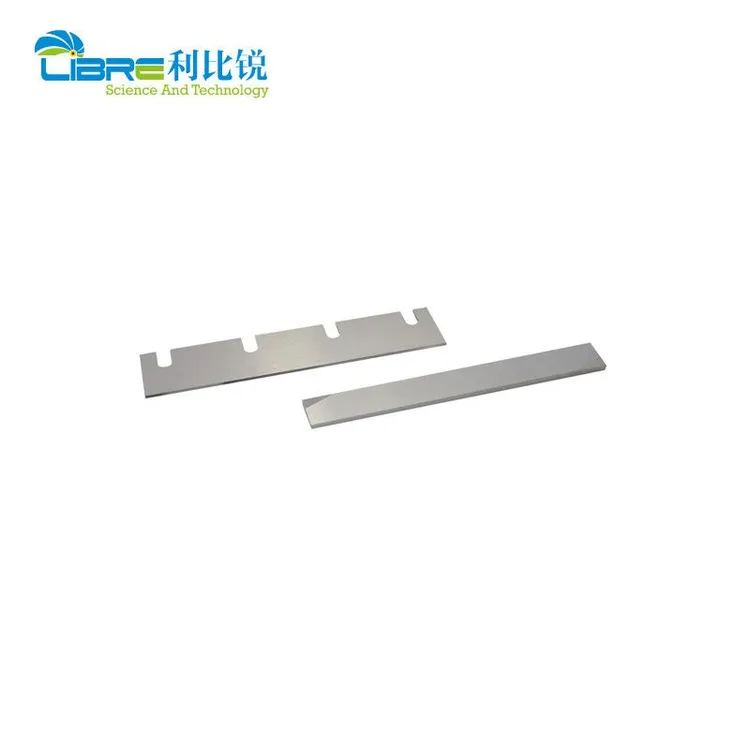
Cutting knives are subject to extreme wear due to the abrasive nature of tobacco and the high rotational speeds of the cutter drum. The hardness of the steel is a critical factor in determining the lifespan of the knife. OEM knives often use specific alloy steels with precise heat treatment processes. Compatible replacements must match these hardness standards, typically measured on the Rockwell C scale, to ensure they maintain a sharp edge for longer periods.
Durability is not just about hardness; it is also about resistance to chipping and deformation. A knife that is too brittle may fracture under stress, while one that is too soft will dull quickly, leading to poor cut quality and increased frequency of changes. When evaluating Hauni Protos spare parts for the cutting system, inspect the edge geometry and material composition. High-quality compatible knives often feature advanced coating technologies that reduce friction and heat buildup, further extending their service life and improving the overall efficiency of the cutting process.
Ensuring Compatibility and Rigorous Testing Protocols
How We Ensure Fit for Protos 70, 80, and 90 Models
The Protos series, including the 70, 80, and 90 models, shares many commonalities but also features distinct mechanical differences. Ensuring that a replacement part fits correctly requires a detailed understanding of these variations. For instance, mounting hole patterns, shaft diameters, and connector types may differ slightly between models. Our approach involves cross-referencing part numbers with precise dimensional data to guarantee a perfect fit. This attention to detail prevents the need for modifications during installation, which could otherwise void warranties or cause mechanical stress.
We utilize 3D scanning and CAD modeling to verify the geometry of each component before production. This digital twin approach allows us to simulate the installation process and identify any potential interferences. By focusing on these technical specifics, we ensure that every Hauni Protos replacement parts item we provide is drop-in ready. This eliminates guesswork for the maintenance team and reduces the risk of installation errors that could lead to premature failure or machine damage.
Testing Protocols: From Bench to Production Line
Before any component leaves our facility, it undergoes a series of stringent tests. On the bench, we check for dimensional accuracy, material hardness, and electrical continuity where applicable. For electronic components like the microwave scanner, we perform signal calibration tests to ensure they meet the required performance standards. This pre-shipment verification is a critical step in maintaining quality control and customer trust.
Furthermore, we conduct simulated production line tests to observe how the parts perform under dynamic conditions. This includes running the components at various speeds and loads to identify any anomalies. By replicating real-world operating conditions, we can validate the durability and reliability of our Hauni machine components. This comprehensive testing protocol ensures that when you install our parts, you are getting a product that has been proven to perform, reducing the risk of unexpected downtime and enhancing the overall efficiency of your production line.
Implementation Strategies for Maintenance Teams
Step-by-Step Replacement Procedures
Proper installation is as important as the quality of the part itself. Begin by powering down the machine and locking out the energy sources to ensure safety. Remove the worn component carefully, noting the orientation and position of any seals or gaskets. Clean the mounting surfaces thoroughly to remove any debris or old adhesive that could interfere with the new part’s fit. This preparation step is often overlooked but is essential for ensuring a secure and accurate installation.
When installing the new Hauni Protos spare parts, follow the manufacturer’s torque specifications for all fasteners. Over-tightening can damage threads or distort components, while under-tightening can lead to vibration and loosening. For electronic components, ensure that all connectors are seated firmly and that shielding is intact to prevent interference. After installation, perform a visual inspection to confirm that everything is aligned correctly before powering the machine back up.
Common Pitfalls and How to Avoid Them
One common pitfall is ignoring the condition of surrounding components. When replacing a cutting knife, for example, inspect the cutter drum and guide plates for wear. Installing a new knife on a worn drum can lead to rapid dulling and poor cut quality. Similarly, when replacing a microwave scanner, check the waveguide and connectors for damage. Addressing these related issues during the replacement process can prevent premature failure of the new part.
Another frequent error is improper calibration. After installing a new component, especially electronic ones, it is crucial to recalibrate the system. Skipping this step can result in inaccurate readings and suboptimal machine performance. Always refer to the technical manual for the specific calibration procedures required for the Hauni Protos replacement parts you have installed. By adhering to these best practices, you can maximize the lifespan of your components and maintain high production standards.
Optimize Your Maintenance Strategy Today
Achieving optimal performance from your Hauni Protos line requires a strategic approach to maintenance and parts sourcing. By understanding the technical requirements of core components and leveraging high-quality compatible alternatives, you can reduce downtime and costs while maintaining product quality. Our range of Hauni machine components is designed to meet the rigorous demands of modern tobacco processing, ensuring reliability and precision in every operation.
Don’t let supply chain delays or high costs disrupt your production schedule. Explore our comprehensive catalog of compatible spare parts and take control of your maintenance strategy. Whether you need microwave scanners, cutting knives, or other critical components, we provide the quality and support you need to keep your line running smoothly.
Browse our full selection of Hauni Protos spare parts and components here to find the exact parts you need for your specific model. Upgrade your maintenance toolkit today and experience the difference that quality and reliability can make in your production efficiency.
