
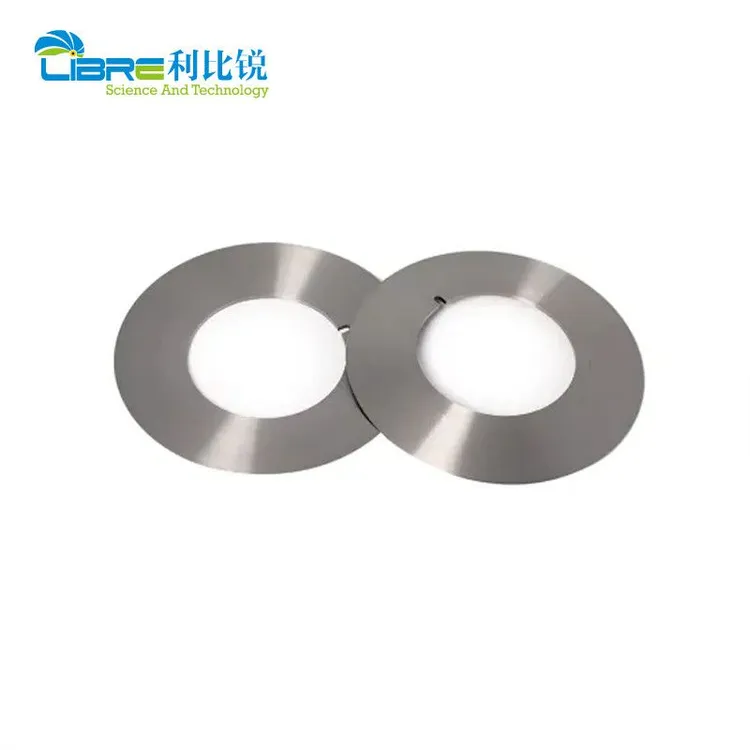
Cigarette Making Machine Blades: Complete Technical Specifications Reference
Blades and knives are the highest-wear components in cigarette manufacturing. A single production line may use 15–20 different blade types across the maker, filter attachment, and packaging sections. This reference provides technical specifications for the major blade categories used in Hauni, Molins, G.D, and Focke equipment.
Cutting Knife Specifications (Cigarette Making)
Cutting knives in cigarette making machines cut the continuous tobacco rod into individual cigarette lengths. These operate at high cyclic speeds and must maintain edge integrity for millions of cuts.
| Machine | Knife P/N | Material | Edge Angle | Thickness | Service Life |
|---|---|---|---|---|---|
| Hauni PROTOS 70/80 | P70-CK-600 | HSS M2 / Carbide GT-15H | 25° ± 1° | 2.0 mm | 400h (HSS) / 2000h (Carbide) |
| Hauni PROTOS V90 | V90-CK-700 | HSS M42 / Carbide GT-20K | 22° ± 0.5° | 2.5 mm | 500h (HSS) / 2500h (Carbide) |
| Molins MARK 8 | M8-CK-100 | HSS M2 with TiN | 28° ± 1° | 1.8 mm | 350h (HSS) / 1800h (Carbide) |
| Molins MARK 9 | M9-CK-200 | HSS M2 / Carbide GT-15H | 27° ± 1° | 2.0 mm | 400h (HSS) / 2000h (Carbide) |
| Hauni KT2/KTC | KT2-CK-300 | Carbide (standard) / HSS (economy) | 20° ± 0.5° | 3.0 mm | 3000h (Carbide) / 600h (HSS) |
Slitter Knife Specifications
Slitter knives cut tobacco into specified strand widths before the cigarette making process. They operate in wet or dry tobacco environments and face the most abrasive conditions.
- Hauni KT2/KTC slitter: 6-blade slitter head, blade thickness 1.0 mm, diameter 90 mm, bore 20 mm
- Hauni KTH slitter: 8-blade slitter head, blade thickness 0.8 mm, diameter 100 mm, bore 25 mm
- Standard blade grade: Tungsten carbide GT-15H (6% cobalt binder, 1.2 µm grain size)
- Economy grade: HSS M42 with TiAlN coating
- Edge geometry: 15°–18° included angle with 0.5 mm land
Garniture Knife Specifications
Garniture knives trim excess tobacco from the formed rod before paper wrapping. They are typically thin, rectangular blades with a single bevelled cutting edge.
| Machine | Blade Dimensions (L×W×T) | Material | Mounting |
|---|---|---|---|
| Hauni PROTOS 70 | 80 × 25 × 1.5 mm | HSS / Carbide | Clamp-mounted, adjustable |
| Hauni PROTOS 80 | 85 × 25 × 1.5 mm | HSS / Carbide | Clamp-mounted, adjustable |
| Molins MARK 8 | 75 × 22 × 1.2 mm | HSS | Screw-mounted, fixed |
| Molins MARK 9 | 75 × 25 × 1.5 mm | HSS / Carbide | Clamp-mounted, adjustable |
Packaging Machine Blade Specifications
- G.D X2/X3/X6 corrugated blades: carbide grade GT-15H, edge angle 30°, thickness 2.0 mm, 4000-hour service life
- G.D X2/X3/X6 inner frame cutter: HSS with TiN coating, edge angle 25°, 2000-hour life
- Focke 700 series blank cutter: carbide single-edge, 3.0 mm thickness, 6000-hour life
- Focke 700 series tear tape cutter: HSS with TiCo coating, 1.5 mm thickness, 2000-hour life
- Molins HLP/HNP packer cutters: HSS M2, 28° edge angle, 1500-hour life
Coating Technologies for Cutting Blades
Surface coatings significantly extend blade life in tobacco applications. The most common options are:
| Coating | Hardness (HV) | Max Temp | Life Multiplier (vs uncoated HSS) | Best Application |
|---|---|---|---|---|
| TiN (Titanium Nitride) | 2300 | 600°C | 2–3x | General-purpose cutting knives |
| TiAlN (Titanium Aluminum Nitride) | 3300 | 900°C | 3–5x | High-speed slitting operations |
| DLC (Diamond-Like Carbon) | 5000–8000 | 350°C | 5–8x | Non-ferrous and paper cutting |
| CrN (Chromium Nitride) | 2000 | 700°C | 1.5–2x | Corrosive environments (humidity) |
Note: DLC coatings are not recommended for heavy-impact applications as they can delaminate under shock loading.
Sharpening Services
ZTLibre offers professional blade resharpening for all major tobacco machine blade types. Our grinding center uses CNC tool and cutter grinders with diamond wheel capacity for carbide blades. Typical resharpening restores 95–100% of new blade performance at approximately 40% of the replacement cost.
ZTLibre maintains an extensive inventory of finished and semi-finished blades, enabling rapid delivery of both standard and custom blade specifications. Contact our technical sales team with your machine model and blade position for a quote within 4 hours.
Cross-Cut Blade Specifications
Cross-cut blades in cigarette packaging machines cut individual cigarette lengths from the continuous rod. These blades operate at extremely high cycle rates and must maintain dimensional stability under repeated impact loading.
| Machine | Blade L × W × T | Material | Edge Angle | Hardness | Cuts per Blade Life |
|---|---|---|---|---|---|
| Hauni PROTOS 70/80 | 120 × 30 × 2.0 mm | HSS M2 / GT-15H | 25° | 64-66 HRC / 78-82 HRA | 2.4M (HSS) / 12M (carbide) |
| Molins MK8/MK9 | 115 × 28 × 1.8 mm | HSS M2 TiN | 28° | 64-66 HRC | 2.1M (HSS) / 10.8M (carbide) |
| G.D X2/X3/X6 | 130 × 32 × 2.5 mm | Carbide GT-15H | 30° | 78-82 HRA | 24M |
| Focke 700 series | 125 × 30 × 3.0 mm | Carbide GT-20K | 30° | 80-84 HRA | 36M |
Knife Holder and Anvil Specifications
The knife holder and anvil system that supports the cutting blade is equally important for consistent cut quality. These components experience wear and must be maintained to OEM specifications.
- Hauni PROTOS knife holder: hardened steel, 58-60 HRC, slide surface flatness 0.005 mm/m. Replace guide bushings at 4000-hour intervals.
- Molins knife holder: case-hardened alloy steel, surface hardness 60-62 HRC, core hardness 35-40 HRC. Inspect clamp surfaces for deformation every 2000 hours.
- Anvil roller specifications: diameter tolerance ±0.01 mm, surface hardness 60-63 HRC, surface finish Ra ≤ 0.4 µm. Replace when local wear exceeds 0.02 mm depth.
Blade Storage and Handling
Proper storage and handling practices extend blade life and prevent premature failures. Critical guidelines include:
- Storage environment: temperature 15-25°C, humidity < 60% RH. Condensation on blade surfaces can initiate corrosion on HSS blades within 24 hours.
- Blade packaging: individual VCI (Vapor Corrosion Inhibitor) paper wrapping prevents corrosion during storage. Never store blades in direct contact with cardboard — cardboard absorbs moisture and transfers acidity.
- Handling precautions: use clean cotton gloves when handling cutting edges. Fingerprint acids can initiate corrosion on HSS surfaces within 72 hours. Carbide surfaces are less sensitive but should still be handled with care.
- Shelf life considerations: carbide blades have essentially unlimited shelf life when stored properly. HSS blades with TiN/TiAlN coatings should be used within 2 years of manufacture for optimal performance.
Edge Failure Modes and Root Causes
Understanding why blades fail helps engineers select the right material and adjust operating parameters. The most common failure modes in tobacco cutting applications are:
- Microchipping: small edge fractures 0.01-0.1 mm in size — caused by hard inclusions in the tobacco or excessive impact loading
- Abrasive wear: gradual edge rounding — normal wear mechanism accelerated by silica content in tobacco and high blade speeds
- Edge deformation: plastic deformation of the cutting edge — caused by excessive cutting forces or insufficient edge angle
- Thermal cracking: cracks perpendicular to the cutting edge — caused by thermal cycling from intermittent cutting or inadequate coolant application
- Coating delamination: coating peeling from the substrate — caused by poor coating adhesion or operating beyond the coating's temperature limit
