
Strategic Sourcing for Hauni Protos Spare Parts in Modern Manufacturing
In the high-stakes environment of tobacco processing, maintaining the uptime of critical machinery is paramount. For facility managers and procurement officers, the reliance on Hauni Protos spare parts is not merely a maintenance necessity but a strategic business decision. When original equipment manufacturer (OEM) supply chains face disruptions, production lines stall, leading to significant financial losses and missed delivery targets. This guide explores how facilities can navigate these challenges by adopting a hybrid sourcing strategy that prioritizes reliability, speed, and cost-efficiency without sacrificing the precision required for high-speed manufacturing.
The transition from exclusive OEM dependency to a diversified supply chain requires a deep understanding of component specifications. Modern tobacco processing plants operate under tight margins, where even minor deviations in part quality can result in product waste or machine downtime. By integrating third-party alternatives that meet strict ISO standards, companies can mitigate the risks associated with long lead times. This article provides a comprehensive comparison of available options, focusing on how to identify high-quality Hauni Protos replacement parts that perform identically to their original counterparts while offering greater flexibility in procurement planning.
Furthermore, the decision to source components beyond the primary manufacturer involves rigorous evaluation of technical documentation and material science. It is essential to understand the engineering tolerances of each subsystem, from the microwave scanners to the cutting mechanisms. This guide aims to equip technical teams with the knowledge needed to audit suppliers, verify certifications, and implement replacement protocols that ensure seamless integration into existing Hauni machine components ecosystems. Ultimately, the goal is to establish a resilient supply chain that supports continuous production excellence.
The Challenge of Original Equipment Manufacturer (OEM) Delays
One of the most significant hurdles in maintaining Hauni Protos lines is the unpredictability of OEM delivery schedules. During global supply chain disruptions or seasonal peaks, OEMs often prioritize larger contracts or newer model support, leaving older or high-demand parts with extended lead times. For a facility running a Protos 70 or 80, waiting weeks for a single critical component can result in millions of dollars in lost revenue. These delays are not just logistical inconveniences; they disrupt production planning, strain inventory management, and increase the pressure on maintenance teams to keep aging equipment running with suboptimal or worn parts.
Additionally, OEMs may discontinue support for legacy models or phase out specific component revisions, forcing facilities to source obsolete parts at premium prices or undergo costly machine upgrades. This lack of long-term availability creates a vulnerability in the operational strategy. By recognizing these limitations, plant managers can proactively seek out alternative suppliers who specialize in remanufacturing or producing compatible Hauni Protos replacement parts. These alternative sources often maintain stock of critical components, ensuring that facilities can respond immediately to breakdowns rather than waiting for a shipment that may never arrive on time.
Cost Efficiency Without Compromising Quality
While the allure of OEM parts lies in their guaranteed compatibility, the cost associated with them often includes a substantial premium for branding and distribution. Third-party suppliers offer a compelling alternative by providing ISO certified tobacco machine parts that are manufactured to the same technical specifications as the originals. These components undergo rigorous quality control processes, including material testing and dimensional verification, to ensure they meet the exact tolerances required by Hauni engineering standards. The result is a part that performs identically in the field but at a fraction of the OEM price.
Achieving cost efficiency does not mean lowering quality standards. In fact, many third-party manufacturers invest heavily in advanced CNC machining and heat treatment technologies to enhance the durability of their components. For example, cutting knives made from premium carbide alloys often outlast OEM versions due to superior material sourcing. By shifting a portion of the procurement budget to high-quality third-party Hauni machine components, facilities can reduce overall maintenance costs while maintaining or even improving machine reliability. This strategic balance allows businesses to allocate resources more effectively, investing in preventive maintenance programs that further extend the lifespan of the entire production line.
Technical Deep Dive: Critical Subsystems and Performance Metrics
Understanding the technical nuances of specific subsystems is crucial for making informed procurement decisions. When evaluating Hauni Protos spare parts, it is essential to look beyond surface-level compatibility and assess the performance metrics that directly impact product quality. Two of the most critical components in the Protos line are the microwave scanners and the cutting knives. These parts play a pivotal role in ensuring the consistency of the tobacco rod, affecting everything from weight control to burn rate. By focusing on these key areas, maintenance teams can identify which components are most susceptible to wear and which suppliers offer the most reliable alternatives.
The microwave scanner is responsible for measuring the density and moisture content of the tobacco stream in real-time. Any deviation in signal stability can lead to inaccurate dosing, resulting in product waste or non-compliant cigarettes. Similarly, the cutting knives determine the precision of the final product’s geometry. Dull or improperly hardened knives can cause fraying, uneven cuts, and increased machine vibration, leading to further mechanical issues. This section provides a detailed analysis of these components, highlighting the technical standards required to maintain optimal performance and offering guidance on how to select the best Hauni Protos replacement parts for these critical functions.
Microwave Scanner: Ensuring Signal Stability and Accuracy
The microwave scanner in Hauni Protos machines is a sophisticated device that relies on precise electromagnetic field generation and reception. Over time, the internal components of the scanner can degrade due to heat, vibration, and exposure to tobacco dust, leading to signal noise and inaccurate readings. When sourcing a replacement, it is vital to ensure that the Hauni machine components being installed meet the original frequency and power output specifications. Third-party suppliers who offer ISO-certified scanners often conduct extensive bench testing to verify signal integrity before shipment.
Furthermore, the calibration process for microwave scanners requires specialized equipment and expertise. A high-quality replacement part should come with detailed calibration instructions and, ideally, support from technical experts who understand the specific nuances of the Protos line. Facilities should avoid generic scanners that do not account for the unique environmental conditions of the tobacco processing line. By investing in a reliable, certified replacement, operators can maintain the tight tolerances required for consistent product quality, ensuring that the machine’s feedback loop remains accurate and responsive. This attention to detail in the scanner subsystem directly translates to reduced waste and higher overall equipment effectiveness (OEE).
Cutting Knives: Hardness Standards and Durability
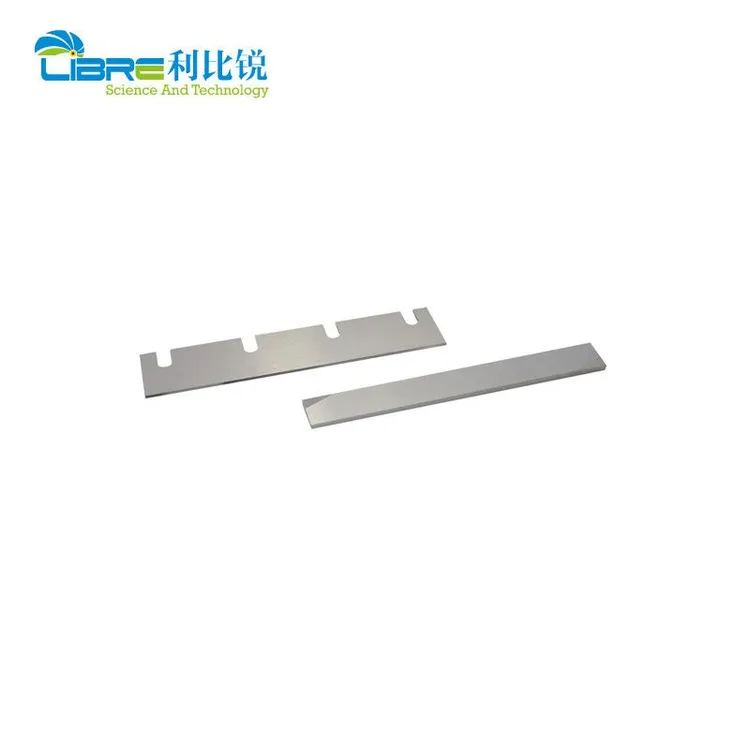
The cutting knives in Hauni Protos machines are subjected to immense friction and impact forces, making their material composition and heat treatment critical to performance. OEM knives typically feature a specific hardness rating, often measured on the Rockwell C scale, to ensure they can cut through the tobacco bed without chipping or dulling prematurely. When selecting third-party Hauni parts, it is essential to verify that the supplier uses high-grade carbide or hardened steel that meets or exceeds these hardness standards. Inferior materials may lead to frequent knife changes, increased downtime, and poor cut quality.
Durability is not just about hardness; it is also about resistance to corrosion and wear. Tobacco contains natural oils and moisture that can accelerate wear on cutting edges. High-quality replacement knives often feature specialized coatings or treatments that enhance their resistance to these environmental factors. Additionally, the geometry of the knife edge must be precisely ground to match the original design. Even minor deviations can cause uneven pressure on the cutting drum, leading to premature bearing wear and other mechanical issues. By prioritizing knives with verified hardness and durability standards, facilities can extend maintenance intervals and ensure a consistent, high-quality finish on every cigarette produced.
Validation and Integration: Ensuring Compatibility Across Models
The Hauni Protos family includes several variants, such as the Protos 70, 80, and 90, each with unique specifications and operational parameters. Sourcing Hauni Protos spare parts requires a thorough understanding of these differences to ensure proper fit and function. A component that works perfectly on a Protos 70 may not be compatible with a Protos 90 due to variations in mounting points, electrical interfaces, or mechanical tolerances. This section outlines the methods used to validate compatibility across these models, providing a framework for procurement teams to verify that the parts they order are suitable for their specific machinery.
Validation is a multi-step process that begins with cross-referencing part numbers and technical drawings. However, physical verification is equally important. Many reputable suppliers offer sample parts for testing before bulk orders are placed, allowing facilities to confirm fit and function in a controlled environment. This proactive approach minimizes the risk of installing incorrect parts, which can lead to costly damage and extended downtime. By establishing a robust validation protocol, facilities can confidently integrate third-party Hauni machine components into their maintenance routines, knowing that each part has been rigorously tested for compatibility and performance.
How We Ensure Fit for Protos 70, 80, and 90 Models
To guarantee compatibility across the Protos 70, 80, and 90 models, we employ a rigorous dimensional analysis process. Each Hauni Protos replacement part is measured against the original OEM specifications using high-precision CNC metrology equipment. This ensures that every dimension, from bolt hole patterns to shaft diameters, matches the original design exactly. For electronic components, we verify electrical characteristics and communication protocols to ensure seamless integration with the machine’s control system. This level of detail is crucial for maintaining the machine’s operational integrity and preventing issues such as misalignment or signal interference.
Additionally, we maintain a comprehensive database of part revisions and model-specific updates. Hauni frequently updates its machines with minor design changes, and a part that was compatible last year may not fit the latest revision. Our technical team stays abreast of these changes, ensuring that the third-party Hauni parts we supply are always up to date. By providing detailed documentation and model-specific guidance, we help facilities avoid the common pitfall of ordering incorrect parts. This commitment to accuracy ensures that every component delivered is ready for immediate installation, reducing lead times and keeping production lines running smoothly.
Testing Protocols: From Bench to Production Line
Before any Hauni Protos spare parts leave our facility, they undergo a series of stringent testing protocols designed to simulate real-world operating conditions. On the bench, components are subjected to stress tests, including thermal cycling, vibration analysis, and performance checks under load. For example, cutting knives are tested for edge retention and sharpness consistency, while microwave scanners are evaluated for signal stability and response time. These tests ensure that the parts meet or exceed OEM performance standards before they are ever installed on a production line.
In addition to bench testing, we conduct field trials in partnership with select facilities to validate performance in live production environments. This feedback loop allows us to identify any potential issues that may not be apparent in a controlled setting and make necessary adjustments to the manufacturing process. By combining rigorous laboratory testing with real-world validation, we provide our customers with a high degree of confidence in the quality and reliability of our ISO certified tobacco machine parts. This comprehensive approach to testing ensures that every part we supply is ready to perform at peak efficiency from the moment it is installed.
Implementation and Best Practices for Maintenance Teams
Even the highest quality Hauni Protos spare parts can underperform if not installed correctly. Proper implementation is key to maximizing the lifespan and efficiency of these components. This section provides step-by-step guidance for maintenance teams on how to replace critical parts safely and effectively. By following established best practices, technicians can avoid common mistakes that lead to premature failure or machine damage. Additionally, we highlight the importance of documentation and training in ensuring that replacement procedures are carried out consistently and accurately across all shifts.
Effective maintenance also involves proactive monitoring and preventive strategies. By tracking the performance of replaced components and analyzing failure patterns, facilities can identify areas for improvement in their maintenance routines. This data-driven approach allows for more informed decision-making regarding part selection and replacement schedules. Ultimately, the goal is to create a culture of excellence in maintenance, where every Hauni machine component is handled with the care and precision it requires to support the high-speed operations of the Protos line.
Step-by-Step Replacement Procedures
Replacing Hauni Protos spare parts requires a systematic approach to ensure safety and precision. The first step is to isolate the machine and follow lockout/tagout procedures to prevent accidental startup. Once the machine is safe, technicians should consult the official service manual for the specific model to identify the correct torque specifications and alignment requirements. For example, when replacing cutting knives, it is crucial to use the correct torque wrench to avoid over-tightening, which can damage the spindle or cause uneven cutting. Each step should be documented, and any deviations from the standard procedure should be noted for future reference.
After installation, a thorough inspection is necessary to verify that the part is seated correctly and that all connections are secure. For electronic components like microwave scanners, this includes checking cable integrity and ensuring that shielding is properly grounded. Once the physical installation is complete, the machine should be run through a series of test cycles to verify performance. Technicians should monitor for any unusual noises, vibrations, or error codes during this phase. By following these detailed procedures, maintenance teams can ensure that every replacement is performed correctly, minimizing the risk of rework and ensuring optimal machine performance.
Common Pitfalls and How to Avoid Them
One of the most common pitfalls when using <
